
Most sambar recipes online are vague about the two things that actually matter: how much tamarind paste to use versus how much dal water, and when exactly to add the sambar powder. I've cooked this dish in a cramped Bengaluru kitchen, in a pressure cooker in a London flat, and once for a Tamil friend who grew up on her grandmother's version. The method below is the one that survived every test—including hers. It's a South Indian sambar recipe that gives you a thick, tangy, coconut-forward bowl without the restaurant-level oil slick.
Quick Skip-Ahead
What is South Indian Sambar Made Of?
Sambar is a tamarind-based lentil stew from South India, usually made with toor dal (split pigeon peas). The base is simple: cooked dal, tamarind extract, a vegetable or two, sambar powder, and a final tempering (tadka) of mustard seeds, dried red chilies, and curry leaves in coconut oil.
Here's where people get confused. North Indian dal is often creamy and mild. Sambar is sour, spicy, and slightly sweet—but not in a sugar way. That sweetness comes from the vegetables, usually pumpkin or carrot, and it should be a whisper, not a shout.
If you've ever eaten sambar that tasted like thin lentil water with chili powder stirred in, that cook added the tamarind too late. Or didn't add enough. Or both.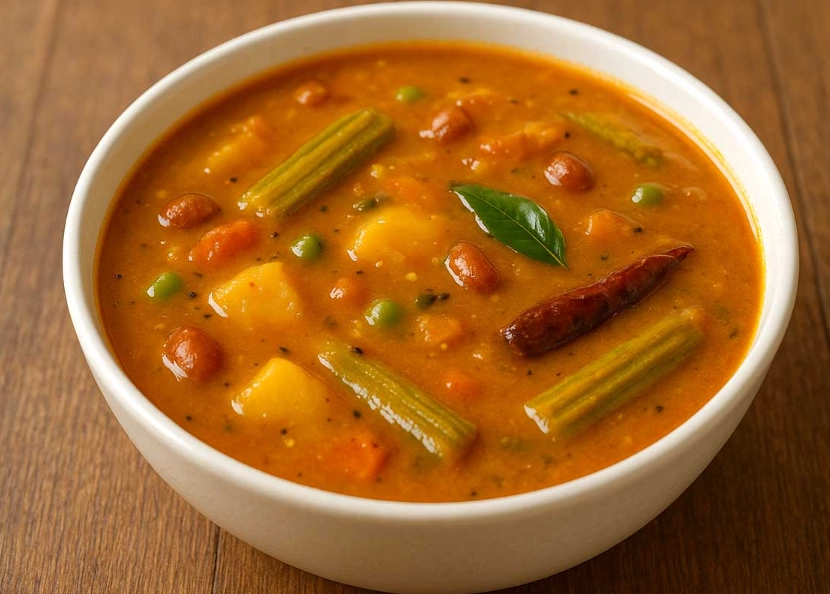
The Ingredient Breakdown That Makes or Breaks It
This South Indian sambar recipe serves 4 as a main with rice. I use a 3-liter pressure cooker. If you're cooking on a stovetop pot, add about 12 extra minutes and more water.
| Ingredient | Exact Amount | Why It Matters |
|---|---|---|
| Toor dal (split pigeon peas) | 3/4 cup | Too much and you get thick dal, not sambar. 3/4 cup is the ceiling. |
| Tamarind paste (store-bought, thick) | 1.5 tablespoons | This is the sourness engine. More than 2 tbsp and you'll taste only tamarind. |
| Sambar powder | 2 level teaspoons | Measure level, not heaped. Heaped spoons make sambar bitter. |
| Vegetables: drumstick, pumpkin, carrot | 2 cups chopped total | Drumstick is traditional. Pumpkin adds body. Carrot brings sweetness. |
| Small onion (shallot) | 10–12 peeled | Whole shallots hold shape and release sweetness slowly. |
| Turmeric powder | 1/4 teaspoon | Just enough for color. More makes it taste medicinal. |
| Asafoetida (hing) | A pinch | Skip it and the sambar tastes flat. Don't skip it. |
| Coconut oil | 2 tablespoons | For tempering. Other oils work but coconut oil is the flavor backbone. |
| Mustard seeds | 1 teaspoon | They must pop. If they don't pop, your oil wasn't hot enough. |
| Dried red chilies | 2, broken | Heat level. Adjust down for kids. |
| Curry leaves | 1 sprig | Add them off heat or they burn in 3 seconds. |
| Salt | 1 teaspoon + more to taste | Start with 1 tsp. Taste after tamarind goes in. |
Step-by-Step: The 40-Minute South Indian Sambar Recipe
Here's the exact timeline I follow on weeknights. It works because the dal cooks while you prep the vegetables.
0:00–0:05 — Soak and start the dal
Rinse the toor dal under cold water three times. The water should run clear, not cloudy. Add 2.5 cups water to the pressure cooker, then the dal, then 1/4 teaspoon turmeric. Seal and cook on medium-high until the first whistle, then reduce heat to low for 8 minutes. Let the pressure drop naturally. Do not run it under cold water—the dal won't be as creamy.
0:05–0:15 — Prep the vegetables while the dal cooks
Peel the shallots. If they're large, halve them. Chop pumpkin into 1-inch cubes (skin on is fine if you scrub it well). Cut drumstick into 2-inch pieces. Carrot into thick coins. Keep them all separate.
0:15–0:25 — Cook the vegetables in tamarind water
In a wide pan, add 1 cup water, the tamarind paste, salt, and 1/4 teaspoon turmeric. Stir. Add the pumpkin and drumstick first. These take longer. After 5 minutes, add the carrot and shallots. Cook until the pumpkin edges soften but the drumstick is still firm—about 8–10 minutes total. If you add everything at once, the shallots turn to mush. I've made that mistake more than once.
0:25–0:30 — Add the cooked dal
Mash the cooked dal with a whisk or potato masher until it's smooth but still has a little texture. Add it to the vegetables. Stir well. Add 1/2 cup hot water if it looks too thick. Let it simmer for 5 minutes.
0:30–0:35 — Add sambar powder
Measure 2 level teaspoons of sambar powder. Lower the heat to a bare simmer, then stir the powder in. Do not boil hard after adding it. Boiling sambar powder for more than 30 seconds turns it bitter. This is the single most common mistake I see. Let it sit on low heat for 4–5 minutes. Taste for salt.
0:35–0:40 — The tempering
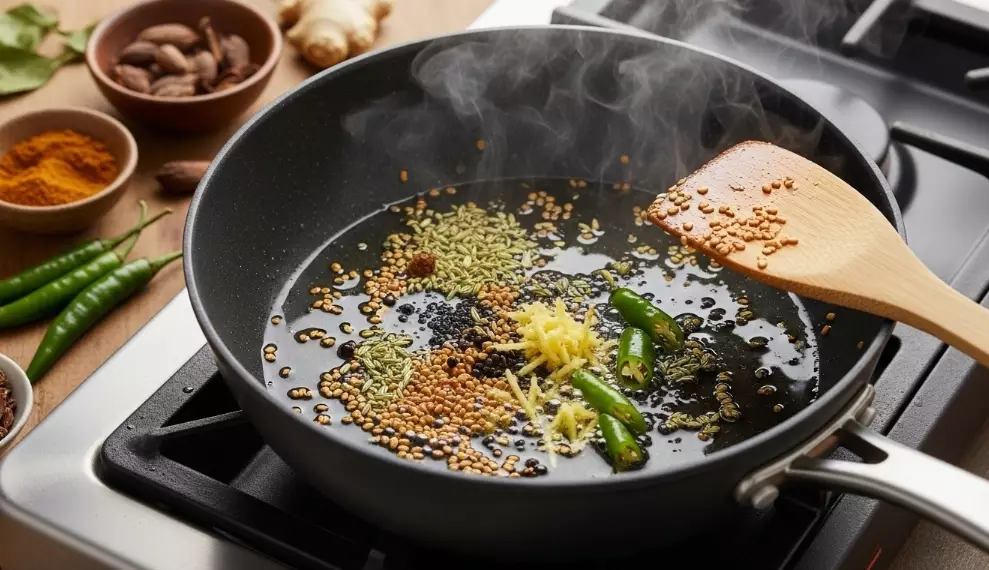
In a small pan, heat coconut oil. Add mustard seeds. Wait for them to pop—about 30 seconds. Add dried chilies and a pinch of asafoetida. Stir for 3 seconds. Turn off the heat. Add curry leaves (they'll sizzle but not burn). Pour the entire tempering into the sambar. Cover immediately for 2 minutes. This traps the aroma.
Serve with rice, idli, or dosa. If you're serving with rice, pour a little ghee on top. It's not traditional in every household, but it's good.
Common Mistakes (I Made All of Them)
Nobody warns you about these. They're not in most recipe books.
Boiling sambar powder. Most recipes say "add sambar powder and boil for 10 minutes." That's why your sambar tastes harsh. Add it at a simmer, not a rolling boil. The volatile oils in the roasted spices burn off.
Adding tamarind with the dal. Tamarind needs to cook with the vegetables first. If you add it at the end, the sourness stays flat and raw. The vegetables need time to absorb it.
Using too much dal. Sambar is not thick dal. It should pour. If your spoon stands up in it, you used more than 3/4 cup of toor dal. Add hot water and a pinch more tamarind, but the flavor won't be the same.
Skipping the shallots. Red onion works in a pinch, but it doesn't release the same sweetness. Shallots are smaller and cook faster. They're not optional if you want the real thing.
Can You Use Store-Bought Sambar Powder?
Yes, and I do most weeks. But not every brand works. Look for a powder that lists coriander seeds and dried red chilies as the first two ingredients. If the first ingredient is "spices" or "red chili powder," put it back. The good ones—I've had good results with brands that also list fenugreek and asafoetida—tell you exactly what's inside.
A quick test: rub a pinch between your fingers. It should feel gritty from ground coriander seeds, not powdery like chili powder. The color should be a rusty brown, not bright red. Bright red means it's mostly chili powder and will make your sambar spicy without depth.
If you want to make your own, a basic sambar powder is equal parts coriander seeds and dried red chilies, plus a small amount of fenugreek seeds and curry leaves, all dry-roasted and ground. It keeps for 2 months in an airtight jar. But for a weeknight dinner, store-bought is fine. The sambar powder is not where you prove your worth.
One more thing—if you can find fresh sambar onions (the small, pink-skinned ones), use them. They're not always available outside South India, but when they are, they make a difference. I once found them at an Indian grocery in New Jersey, and the sambar tasted like the one from a tiny stall near Madurai. That's a true story.
Sambar Troubleshooting FAQ
My sambar tastes sour but not in a good way. What went wrong?
You either used too much tamarind or added it at the end. Tamarind needs to cook with the vegetables for at least 8 minutes to mellow out. If you added it after the dal, the sourness stays sharp. The fix: simmer the whole pot for 10 more minutes with a peeled potato cut in half (it absorbs excess acid), then remove the potato.
Can I make this South Indian sambar recipe without a pressure cooker?
Yes. Soak the toor dal in hot water for 30 minutes before cooking. Then boil it in a covered pot with 3 cups water for 35–40 minutes, or until the dal mashes easily between your fingers. Add more hot water if it dries out. The total cooking time will be closer to 70 minutes, not 40.
Why does my sambar become watery after adding the dal?
You didn't mash the dal enough, or you added too much water to the vegetables. The dal should be mashed until it's the consistency of thick applesauce—no whole lentils visible. Then add it to the vegetable mixture, which should already be mostly dry. Add hot water only if the sambar is too thick to pour.
My sambar has a bitter aftertaste. What causes that?
Almost always the sambar powder was boiled too hard or too long. The spices in sambar powder are already roasted. Boiling them again for more than 30 seconds pulls out bitter compounds. Add the powder at a low simmer, stir once, and don't let the pot bubble aggressively.
This article was fact-checked against traditional South Indian home cooking methods and standard ingredient ratios used by home cooks in Tamil Nadu and Karnataka.
Leave a Comment